
The pituitary gland is located at the base of the brain, roughly in line with the top of the nose. It is quite small (about the size of a pea). The pituitary is often called the “master gland”, as it controls the functioning of many other endocrine glands of the body, including the thyroid, adrenals and reproductive glands. Disorders can lead to too much or too little hormone, affecting overall health.
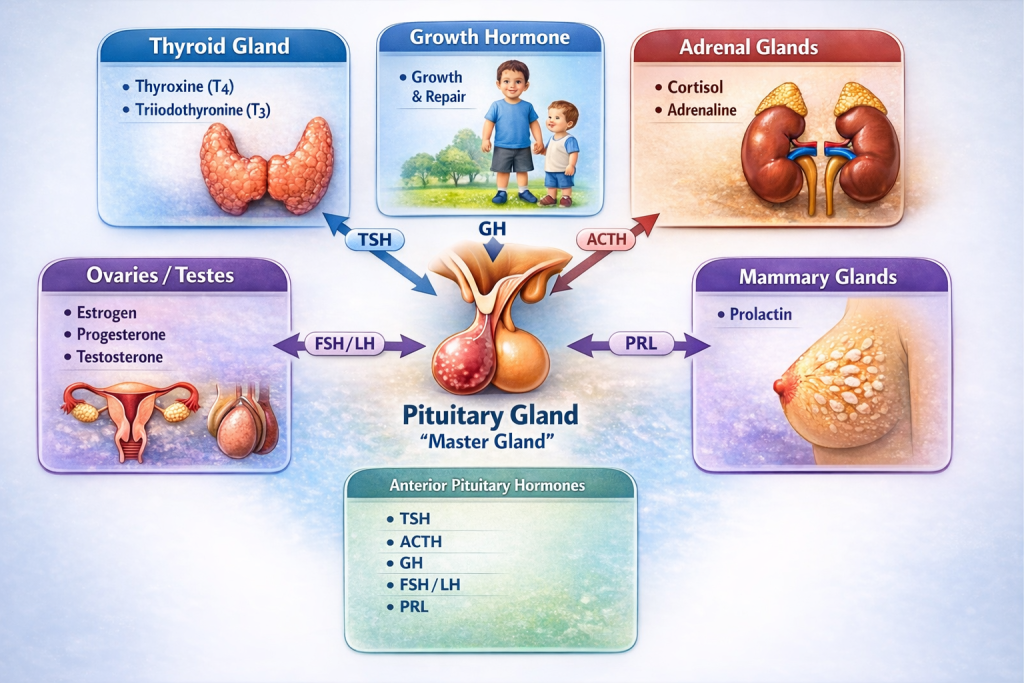
The hormones made in the pituitary gland (anterior) are:
Prolactin
This is responsible for the stimulation of breast milk production after childbirth.
An imbalance of high prolactin levels can affect the menstrual cycle, sexual function, and fertility.
Growth Hormone (GH)
This stimulates growth in childhood and assists in maintaining healthy bones, muscles, and well-being in adults. GH also affects fat distribution in the body.
An imbalance of high GH levels in adults can cause Acromegaly and Gigantism in children.
Adrenocorticotropin (ACTH)
This stimulates cortisol production by the adrenal glands. It assists in maintaining our blood pressure and blood glucose levels.
An imbalance of ACTH affects cortisol production. Too much cortisol causes Cushing’s Syndrome (or Cushing’s Disease) and too little causes adrenal insufficiency.
Thyroid Stimulating Hormone (TSH)
This stimulates the thyroid gland to produce thyroid hormones which regulate our body’s metabolism, energy levels, growth, and our nervous system’s activity.
Too much results in hyperthyroidism and too little results in hypothyroidism (see these pages on this website for more detail on these conditions).
Luteinizing Hormone (LH)
Which stimulates ovulation in women and testosterone production in men.
Follicle Stimulating Hormone (FSH)
This stimulates the ovaries in women to produce estrogen and for egg development, and stimulates sperm production in men. It works together with LH in enabling normal function of the testes and ovaries
The hormones stored in the pituitary gland (posterior) are:
Antidiuretic Hormone (ADH)
Also known as Vasopressin, this hormone regulates the blood’s sodium levels and the water levels in the body.
Too little ADH results in increased urination and thirst and is known as “diabetes insipidus”.
Oxytocin
Oxytocin stimulates uterine contractions during labour, causes milk ejection during breastfeeding, and promotes bonding and social attachment.
It is sometimes called the “bonding” or “love” hormone.