

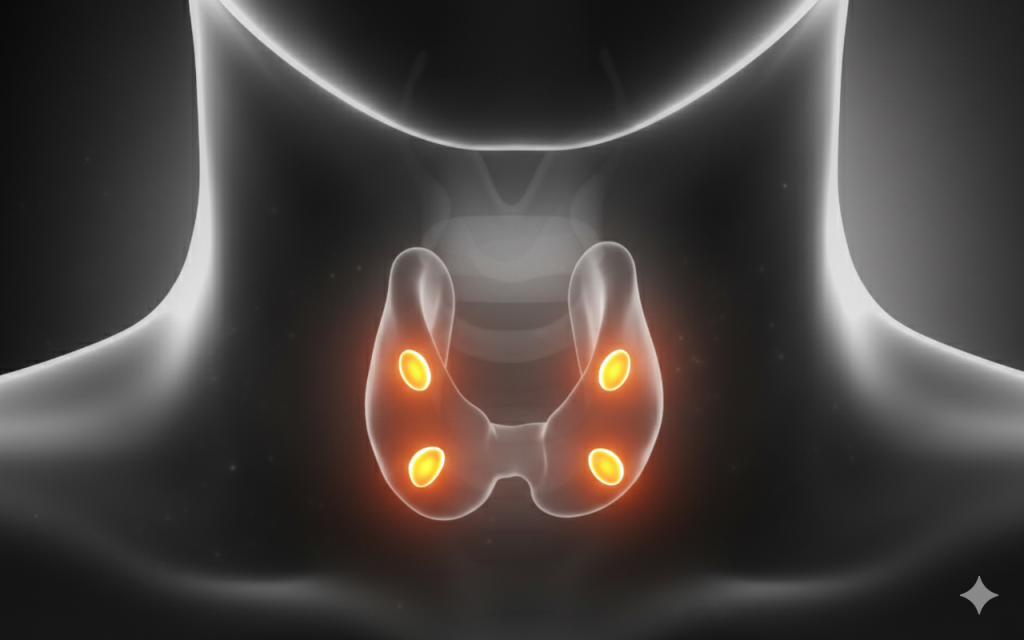
The parathyroid glands are four small glands, each about the size of a grain of rice, located in the neck near the thyroid gland. Their main function is to secrete parathyroid hormone (PTH), which regulates the body’s calcium levels by stimulating cells in the bones to release calcium into the bloodstream.
Calcium is essential for muscle contraction and proper functioning of the muscular and nervous systems. Despite their proximity and name, the parathyroid glands are not related to the thyroid gland.
Parathyroid Gland Disorders
When the parathyroid glands produce too much or too little PTH, various disorders can arise.
Hyperparathyroidism (HPT)
HPT occurs when one or more parathyroid glands become overactive, producing excessive PTH. This results in high calcium levels in the blood (hypercalcemia).
- The most common cause is a benign tumour on a parathyroid gland.
- Rarely, when two or more glands are overactive, the condition is called hyperplasia.
Complications of hypercalcemia may include:
- Kidney stones
- Heart disease
- High blood pressure
- Osteoporosis
- Peptic ulcers
- Pancreatitis
Symptoms of HPT
Many patients have no symptoms, but mild signs may include:
- Muscle weakness and joint or bone aches
- Fatigue or increased need for sleep
- Depression
Advanced HPT may cause:
- Loss of appetite
- Nausea and vomiting
- Increased thirst and urination
- Constipation
- Memory impairment or confusion
Risk factors
- Most common in people aged 50–60
- Women are affected approximately three times more than men
- Rarely, HPT can be caused by genetic disorders or secondary to kidney failure
Diagnosis of HPT
Tests may include:
- Blood tests to measure calcium and PTH levels
- Bone density scan (DEXA)
- X-ray
- CT scan
- Ultrasound
- Nuclear scan
Treatment of HPT
Treatment depends on the type of HPT (primary, secondary, or tertiary) and calcium levels:
Primary HPT
- Medications to lower calcium
- Correction of dehydration with IV fluids
- Surgical removal of the affected parathyroid gland
Secondary HPT
- Oral vitamin D supplementation
Tertiary HPT
- Specialist medications as advised
Hypoparathyroidism
Hypoparathyroidism is a rare condition in which the body does not produce enough PTH, leading to low calcium and high phosphorus levels in the blood.
Common causes include:
- Neck surgery or damage to the parathyroids
- Low magnesium levels
- Autoimmune conditions
Associated conditions may include:
- Addison’s disease
- Cataracts
- Parkinson’s disease
- Pernicious anaemia
Symptoms of hypoparathyroidism
- Muscle cramps, pain, and twitching
- Tingling in fingertips, lips, and toes
- Mood swings
- Fatigue
- Dry, rough skin
- Brittle hair and nails
Diagnosis
- Blood tests measuring low PTH, low calcium, and high phosphorus
Treatment and management
Treatment aims to relieve symptoms and restore normal calcium and mineral levels:
- Calcium carbonate supplements
- Vitamin D supplements
- Regular blood tests to monitor calcium and phosphorus levels
- Dietary advice emphasizing a high-calcium, low-phosphorus diet