

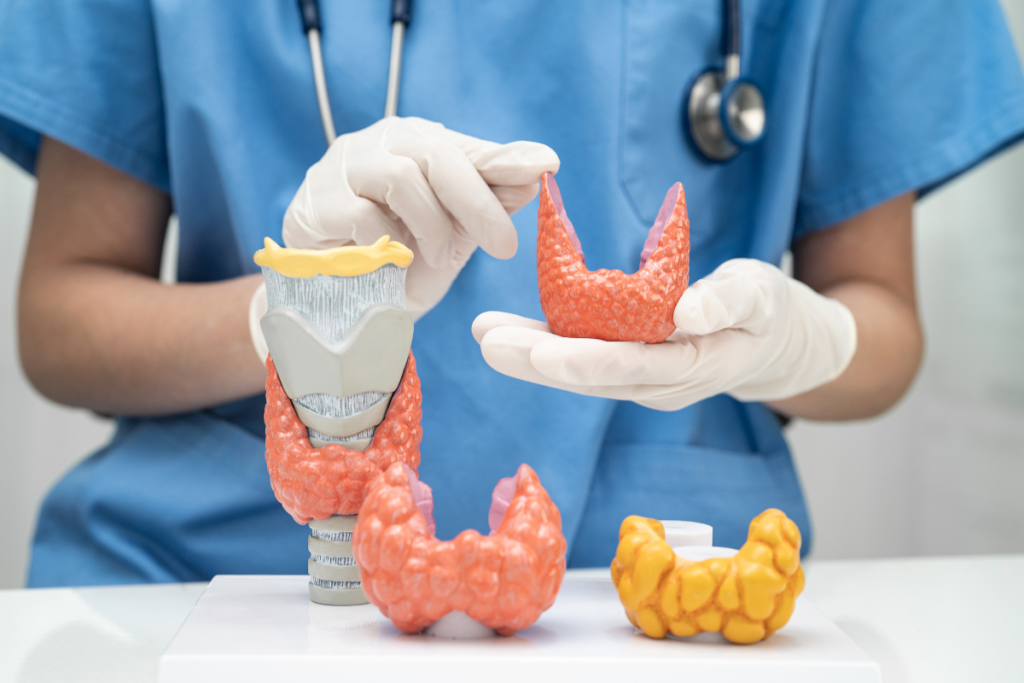
The thyroid gland, located in the front of the neck, plays a crucial role in regulating the body’s metabolism. It provides energy to most organs and cells and helps control how the body uses fats and carbohydrates, body temperature, heart rate, protein production, and calcium levels in the blood.
What are thyroid nodules?
Thyroid nodules are abnormal growths or lumps that develop in the thyroid gland. They may be solid or fluid-filled and can appear as a single nodule or a cluster of nodules. Some nodules are easily felt, while others may be located deep within the gland, making them harder to detect.
Thyroid nodules are common, and if they are benign and remain unchanged, they may not require treatment. However, all thyroid nodules need to be investigated to determine whether they are benign or cancerous.
What is thyroid cancer?
Thyroid cancer occurs when cells in the thyroid mutate and begin to grow and divide abnormally. Like other cancers, early detection is important for successful treatment.
Causes of thyroid nodules and thyroid cancer
Thyroid Nodules
Most thyroid nodules result from an overgrowth of normal thyroid tissue, though the exact cause is unknown. Genetic factors are believed to play a role. Other less common causes include:
- Hashimoto’s thyroiditis
- Thyroiditis (chronic inflammation of the thyroid)
- Thyroid cancer
- Iodine deficiency (rare in Australia due to iodized salt and multivitamins)
Types of thyroid cancer:
- Papillary thyroid cancer (most common)
- Follicular thyroid cancer
- Anaplastic thyroid cancer
- Medullary thyroid cancer
- Other rarer types
The type of thyroid cancer diagnosed influences the treatment plan.
Symptoms of thyroid nodules or thyroid cancer
Symptoms vary between individuals but may include:
- Enlarged thyroid gland (goiter)
- Pain or discomfort at the base of the neck
- Difficulty swallowing
- Difficulty breathing
- Hoarse voice
If thyroid nodules produce excess thyroid hormone, they may also cause hyperthyroidism symptoms. You can read more about hyperthyroidism on this website.
How are thyroid nodules diagnosed?
Thyroid nodules are often discovered during a physical examination. Once detected, further tests may include:
- Thyroid ultrasound
- Thyroid scan
- Fine-needle aspiration (biopsy)
- Blood tests to assess thyroid function
How are thyroid nodules treated?
- Benign nodules that remain unchanged may not require treatment but should undergo regular surveillance (every 6–18 months)
- If necessary, treatment may include hormone therapy, radioactive iodine, or in severe cases, surgical removal of part or all of the thyroid—especially if the nodule interferes with breathing or swallowing
How is thyroid cancer treated?
Treatment for thyroid cancer depends on:
- The type and stage of the cancer
- Your age
- Your overall health
Treatment may include surgery, radioactive iodine, thyroid hormone therapy, or a combination of approaches, tailored to your individual needs.
What should you do if you notice a thyroid lump or symptoms?
If you are concerned about thyroid nodules or related symptoms, speak to your GP. If necessary, they can arrange a referral to Dr Imran, an endocrinologist specialising in thyroid conditions, for further assessment and management.